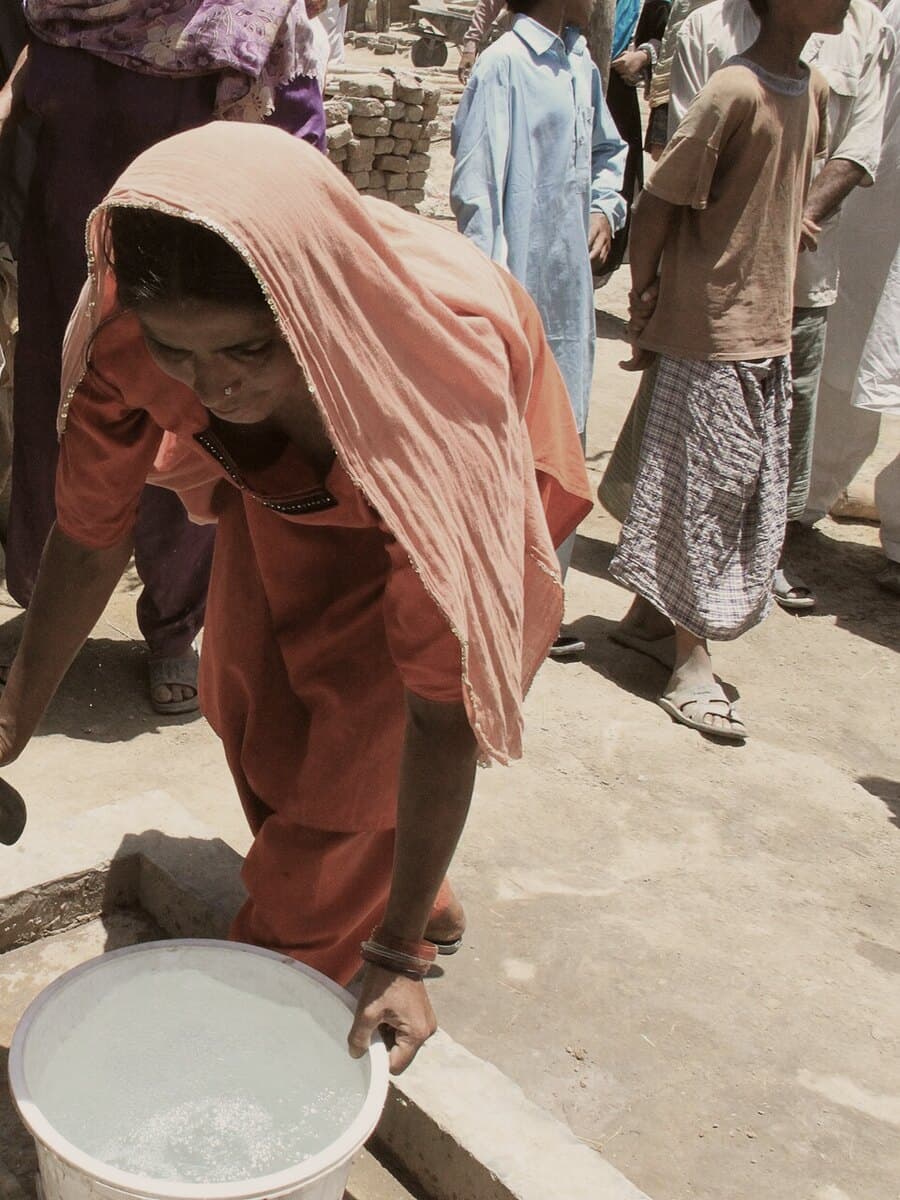
Abstract
Access to safe drinking water is usually treated as an engineering and public health problem: a question of pipes, storage tanks, chlorine residuals and bacterial counts. This article argues that in rural Gilgit-Baltistan, in the far north of Pakistan, it is at least as much a sociological problem. Drawing on peer-reviewed research published between 2015 and 2024, together with national and regional monitoring data, the paper reviews what is known about drinking water access and quality in rural Pakistan and in Gilgit-Baltistan specifically, and then reads that evidence through a sociological lens. Three themes emerge. First, contamination in the region is largely social in origin rather than natural: open channels shared with livestock and irrigation, an absence of treatment at the point of supply, and settlement patterns that place households downstream of their own waste. Second, the burden of unsafe water is distributed unequally along lines of income, gender and location, so that the households least able to absorb the cost of coping tend to carry the most of it. Third, the region’s ambiguous constitutional position and thin administrative capacity have left water services to be delivered, where they are delivered at all, largely by community organisations and non-governmental programmes rather than by the state. Evaluations of community-managed schemes suggest these arrangements can work well, but they also make safe water contingent on local social capital rather than on citizenship. The paper closes with policy recommendations that treat water as a matter of entitlement and accountability rather than of hardware alone.
- drinking water
- Gilgit-Baltistan
- household water insecurity
- rural Pakistan
- water justice
- sociology of health
1Introduction
There is a particular irony in writing about unsafe water in Gilgit-Baltistan. The region sits where the Karakoram, Himalaya and Hindu Kush ranges meet, and it holds some of the largest glacier systems outside the polar zones. Water, in the raw physical sense, is not what is missing. What is missing is water that is safe to drink, close enough to the house that collecting it does not consume a large part of a woman’s working day, and reliable enough that a household can plan around it. A village can sit beside a torrent of glacial melt and still have children falling ill from what comes out of the tap.
That gap between abundance and safety is where sociology becomes useful. Water quality testing tells us that a sample contains coliforms; it does not tell us why the channel was left open, who decided not to build a sedimentation tank, whose labour goes into fetching and boiling, or why one valley received a piped scheme and the neighbouring one did not. Those are questions about institutions, resources, hierarchies and the distribution of risk — which is to say, sociological questions. Over the past decade a substantial body of scholarship has made this argument in general terms, reframing water security as a relational and experiential condition rather than a purely hydrological or technical one (Jepson et al., 2017; Sultana, 2018; Young et al., 2019). Comparatively little of that work has been applied to Pakistan’s mountain north.
Figure 1. Pathways from social conditions to unsafe drinking water and its consequences in rural Gilgit-Baltistan.
Source: author’s own framework, developed from Jepson et al. (2017) and Sultana (2018).
This article attempts that application. It is a review and analysis paper rather than a report of original fieldwork. Its evidence base consists of peer-reviewed studies published between 2015 and 2024 on water quality, water insecurity and waterborne disease in Pakistan and in Gilgit-Baltistan; monitoring reports from the Pakistan Council of Research in Water Resources (PCRWR); household survey data from the Multiple Indicator Cluster Survey conducted in the region; and the WHO/UNICEF Joint Monitoring Programme’s global reporting on drinking water services. Studies were identified through searches of PubMed, Europe PMC, ScienceDirect and Google Scholar using combinations of the terms “drinking water”, “water insecurity”, “water quality”, “WASH”, “Gilgit-Baltistan” and “Pakistan”, and were retained where they reported empirical findings or offered a conceptual framework relevant to the sociology of water access.
The argument proceeds in three steps. The literature review sets out, first, why recent scholarship treats water access as a social relation; second, what is known about drinking water and waterborne disease in Pakistan as a whole; and third, what the smaller regional literature says about Gilgit-Baltistan. The discussion then draws these threads together around four factors — geography, poverty, gender and governance, summarised in Figure 1 — and considers what the region’s heavy reliance on community-managed supply systems implies for policy. The conclusion returns to the question of entitlement: whether safe water in Gilgit-Baltistan is best understood as a service that is failing, or as a right that has not yet been established.
2Literature Review
2.1From resource to relation: the sociological turn in water research
For most of the twentieth century, water access was measured by counting infrastructure. A household either had a tap or it did not; a village either had a scheme or it did not. The limitation of that approach is now widely acknowledged. Jepson and colleagues (2017) proposed a relational, capabilities-based framework in which water security is understood not as the presence of a physical connection but as the ability of people to lead the lives they have reason to value, given the water available to them. On that reading, two households with identical taps may have very different levels of water security if one can rely on the supply and the other cannot, or if one can afford to boil and the other cannot.
Sultana (2018) pushed the argument further into normative territory, arguing that water problems are rarely problems of physical scarcity alone and are better analysed as questions of justice — distributional, procedural and recognitional. Who gets water, who decides how it is allocated, and whose claims are treated as legitimate in the first place. This matters for regions such as Gilgit-Baltistan, where the question of political recognition is not a metaphor but a live constitutional issue.
Alongside this conceptual work, a parallel effort has been made to measure water insecurity as people actually experience it. The Household Water InSecurity Experiences (HWISE) Scale, developed and validated across low- and middle-income countries by Young et al. (2019), captures dimensions that infrastructure counts miss entirely: worry about running out, interruptions to supply, having to change what one eats, going to bed thirsty, feeling angry or ashamed about one’s water situation. The scale’s validation across widely differing settings suggested that these experiences form a recognisable and comparable syndrome rather than a set of local idiosyncrasies.
The health consequences of that syndrome extend well beyond diarrhoeal disease. In a systematic review and meta-analysis of twenty-five studies covering 23,103 participants across sixteen countries, Kimutai et al. (2023) found substantial associations between household water insecurity and common mental disorders — a standardised mean difference of 1.38 across studies using continuous outcome measures, and a pooled odds ratio of 5.03 in those using binary measures. Heterogeneity between studies was high and most designs were cross-sectional, so the effect sizes should be read as indicative rather than precise. Even so, the direction and consistency of the finding support a claim that a purely microbiological account of water and health is incomplete. Water insecurity is distressing in itself, independently of whether it makes anyone acutely ill.
Finally, the distribution of that burden is patterned by gender. Kakinuma and Wada (2024) show that water insecurity and gender inequality overlap systematically at the global scale, and the WHO/UNICEF Joint Monitoring Programme devoted its 2023 progress report specifically to gender, noting that where water is collected off-premises the task falls disproportionately on women and girls (WHO & UNICEF, 2023). Time spent fetching water is time not spent in school, in paid work, or at rest.
2.2The national picture: Pakistan
Pakistan provides an unusually clear illustration of the gap between having a water source and having safe water. The country’s per capita renewable water availability fell from roughly 5,600 cubic metres at independence in 1947 to around 1,038 cubic metres by 2021, placing it close to the conventional threshold for water scarcity (Figure 2; Kiran et al., 2023). But the more immediate problem for public health is contamination rather than volume. Fida et al. (2023), reviewing water contamination and human health risk across Pakistan, document widespread microbiological contamination alongside chemical hazards including arsenic, fluoride and heavy metals, with the specific mix varying considerably by province and by source type.
Figure 2. Renewable water availability per person in Pakistan, 1947 and 2021, against the conventional water scarcity threshold.
Source: figures reported in Kiran et al. (2023). Chart prepared by the author.
Qamar et al. (2022), in a review of water and sanitation in Pakistan, connect this contamination to a recurring disease burden of diarrhoeal illness, typhoid, hepatitis A and E, and cholera, and note that treatment and monitoring capacity is thin relative to the scale of the problem. Ishaque et al. (2023) argue that the underlying difficulty is one of governance: policy exists on paper, including the National Water Policy of 2018, but implementation is fragmented across federal, provincial and local bodies with overlapping mandates and weak enforcement. Kiran et al. (2023) reach a similar conclusion from a legal standpoint, finding that Pakistan’s environmental statutes are reasonably comprehensive in text but poorly enforced in practice, with penalties too small and monitoring too sparse to change behaviour.
A useful recent contribution comes from Fatima and Ünsal (2024), who analysed the determinants of diarrhoea among children under five across Pakistan using multiscale geographically weighted regression. Their central finding is that the determinants are not uniform: the relative weight of factors such as sanitation, maternal education and household wealth varies from district to district. This is methodologically important for a paper of the present kind, because it undermines any assumption that a nationally derived policy will fit a region as distinctive as Gilgit-Baltistan.
It is also worth noting a definitional issue that runs through all of this, set out in Figure 3. Global monitoring distinguishes between a “basic” drinking water service — an improved source within a thirty-minute round trip — and a “safely managed” service, which additionally requires that the source be accessible on premises, available when needed, and free from priority contamination (WHO & UNICEF, 2023). Headline figures for “access” in Pakistan generally refer to the former. A protected spring feeding an open channel counts as an improved source; it may still deliver water with faecal contamination to the tap.
Figure 3. The JMP drinking water service ladder, and where much rural supply in Gilgit-Baltistan sits on it.
Source: service definitions from WHO & UNICEF (2023). Figure prepared by the author.
2.3The regional picture: Gilgit-Baltistan
The literature on Gilgit-Baltistan is thinner, more recent, and dominated by water quality testing rather than social analysis. The most informative single study for present purposes is Shah et al. (2022), who assessed water quality and infrastructure condition across twenty-six community-managed schemes built under the Water and Sanitation Extension Programme (WASEP) and twelve comparison sites without such schemes. The contrast is stark (Figure 4). Ninety-four per cent of rural and eighty-three per cent of urban samples from WASEP schemes met WHO drinking water standards with no Escherichia coli detected, compared with eight per cent of rural and none of the urban control samples. Infrastructure condition scores followed the same pattern. The comparison sites in that study are, in effect, a picture of the regional baseline: water arriving at the household largely untreated and frequently contaminated with faecal indicator organisms.
Figure 4. Drinking water samples meeting WHO standards in community-managed schemes and comparison sites, Gilgit-Baltistan.
Source: data reported in Shah et al. (2022). Chart prepared by the author.
Chemical contamination has also been documented. Khatoon et al. (2024) evaluated carcinogenic and non-carcinogenic health risks from heavy metals in drinking water, vegetables and soil in Gilgit-Baltistan and reported exposures of concern, indicating that microbiological risk is not the region’s only water quality problem. Regional monitoring by the Pakistan Council of Research in Water Resources has repeatedly identified bacteriological contamination and high turbidity in supplies across the territory (PCRWR, 2020, 2021).
Two features of the mountain context complicate the picture further. The first is the physical origin of the water itself. Supplies drawn from glacial melt carry heavy suspended sediment loads, particularly in the melt season, which raises turbidity and reduces the effectiveness of any disinfection that is attempted. The second is climate change. Ali et al. (2024), studying land-based livelihoods in District Nagar, document how shifting melt regimes, altered precipitation and increased hazard exposure are reshaping the resource base on which mountain households depend. Their focus is on livelihoods rather than drinking water directly, but the mechanism transfers: a supply system designed around a predictable seasonal flow becomes less reliable as that flow becomes less predictable.
2.4Households, gender and the labour of coping
Very little qualitative work on water insecurity has been published from Gilgit-Baltistan itself, and this is a real gap in the literature. The closest Pakistani analogue is Ahmed et al. (2021), whose qualitative study in water-insecure villages of Rajanpur district in South Punjab used focus groups and key informant interviews to trace the consequences of an absent water supply. Their findings are worth stating plainly: households relied on brackish, canal or flood surface water; the workload and stress of securing water fell principally on mothers; women reported harassment while fetching water; and participants linked maternal dehydration and psychological strain to reduced breastmilk production. The authors conclude that water justice is a precondition for maternal and child nutrition rather than an adjacent concern.
The ecology of South Punjab is nothing like that of the Karakoram, and the findings cannot simply be transposed. But the social mechanism they describe — an absent public supply converted into unpaid female labour, with nutritional and psychological consequences downstream — is not ecology-specific. Household survey data for Gilgit-Baltistan collected under the Multiple Indicator Cluster Survey provide the regional denominators for household water sources, sanitation and child health outcomes against which such mechanisms would need to be examined (UNICEF & Government of Gilgit-Baltistan, 2018).
3Discussion
3.1The contamination is social before it is biological
The single most important inference to draw from the regional evidence is that the water in Gilgit-Baltistan is not intrinsically dangerous. It becomes dangerous through a sequence of ordinary social arrangements. Water is typically diverted from a spring, stream or channel and carried to settlements in open or partly covered conduits that also serve irrigation. Livestock use the same channels. Household waste and, in many villages, human excreta enter the system upstream of downstream users. There is usually no sedimentation, no filtration and no disinfection between source and tap.
None of those steps is a natural fact. Each represents a decision — or, more often, the absence of any decision by anyone with the authority and resources to make one. This is precisely what the WASEP comparison demonstrates. When a scheme is built with a protected intake, a closed conveyance, sedimentation and a system for managing quality, the water is overwhelmingly safe; when it is not, the water is overwhelmingly unsafe (Shah et al., 2022). The variable is the social arrangement, not the mountain.
This has an important consequence for how the problem should be framed. If unsafe water were a consequence of geology or altitude, the appropriate response would be technical adaptation. Because it is a consequence of institutional arrangements, the appropriate response is institutional: someone must be responsible for the channel, accountable for the quality of what comes out of the tap, and answerable when it fails.
3.2Geography as a social, not merely physical, condition
Terrain does matter, but it matters mainly through its effect on the cost of service delivery and on the political weight of the people who live in it. Gilgit-Baltistan’s settlements are small, widely separated and often reachable only by roads that close in winter or after landslides. Per-household infrastructure costs are therefore high, supervision is difficult, and spare parts and technical staff are far away. In a system where public investment follows population density and political influence, dispersed mountain villages lose on both counts.
Distance also shapes what happens when water fails. A household in a large city with an unreliable supply can, at some cost, buy from a tanker or a bottled water vendor. In a remote valley those markets are thin or absent, so the only available substitutes are behavioural: boiling, which requires fuel; storing, which introduces its own contamination risks; or simply accepting the risk. Climate change adds a further layer, since the shifting melt and precipitation regimes documented by Ali et al. (2024) act on systems that were already operating with little margin.
3.3Poverty and the unequal cost of coping
Where a public supply is unsafe, the burden of making it safe is transferred to households, and that transfer is regressive. Boiling drinking water for a family requires fuel that must be bought, gathered or cut. Where fuelwood is collected rather than purchased, the cost appears as time and physical labour rather than as expenditure, which makes it easy to overlook in economic accounting but no less real for the person carrying the load. Filters must be bought and their cartridges replaced. Bottled water, where it is available at all, is affordable only to a small minority.
The result is a familiar sociological pattern in which risk is stratified. Better-off households can convert money into safety; poorer households convert labour into partial safety, or absorb the risk. And the illness that follows is itself economically regressive: a child’s episode of diarrhoea costs a daily wage earner more, proportionally, than it costs a salaried household, both in treatment expenditure and in forgone earnings. Fatima and Ünsal (2024) find household wealth and maternal education among the significant determinants of childhood diarrhoea in Pakistan, with their relative importance varying spatially — evidence that the pathway from poverty to waterborne illness is real but locally specific.
There is also a less visible cost. If the meta-analytic association between water insecurity and common mental disorders reported by Kimutai et al. (2023) holds in mountain settings, then the chronic uncertainty of an unreliable supply is itself a health exposure. The person who worries about whether the channel will run tomorrow is carrying a burden that no water quality test will detect.
3.4Gender and the household division of water labour
Where water is not delivered to the premises, someone must fetch it, and the international evidence is unambiguous about who that someone usually is (WHO & UNICEF, 2023; Kakinuma & Wada, 2024). In rural Pakistan the pattern documented by Ahmed et al. (2021) extends beyond fetching to the whole domestic water economy: deciding whether there is enough to wash with, rationing during shortages, boiling for infants, and managing the consequences when a child falls ill.
Two implications follow. The first is distributional. An improvement that reduces collection time is not a neutral efficiency gain; it is a transfer of hours back to women and girls, with knock-on effects for schooling and for paid work. The second is procedural. If women hold most of the practical knowledge about a village’s water — which source is reliable, when the channel silts, what the water tastes like after rain — then water committees composed entirely of men are not merely inequitable but technically weaker. This is where Sultana’s (2018) distinction between distributional and procedural justice does real analytical work: it is possible to distribute a benefit fairly while systematically excluding a group from the decisions that produced it, and the exclusion tends eventually to undermine the benefit.
3.5Governance, administrative ambiguity and the retreat of the state
Gilgit-Baltistan’s constitutional position is unresolved. It is administered by Pakistan but is not a province, and its residents do not have the same representation in the national legislature as residents of the four provinces. Whatever one’s view of the underlying dispute, the administrative consequences for service delivery are straightforward. Legislative frameworks written for provinces apply unevenly or by extension. Fiscal transfers do not follow the same formulas. Regulatory bodies are weaker, and lines of accountability are longer and less clear.
This compounds problems that are national in scope. Ishaque et al. (2023) and Kiran et al. (2023) both identify implementation and enforcement, rather than the absence of policy, as Pakistan’s central water governance failure. In a territory with ambiguous constitutional standing and limited fiscal autonomy, that enforcement deficit is deeper still. The practical outcome is that in many valleys there is no institution whose job it is to guarantee the quality of drinking water, and consequently no one who can be held responsible when it is unsafe.
It would be too simple to call this deliberate neglect. Much of it is the ordinary result of thin capacity, difficult terrain and competing demands on a small budget. But the effect on residents is the same whatever its intent, and it is reasonable to describe a situation in which the state is systematically absent from a basic service as a form of structural neglect, in the sense that the outcome is produced by the arrangement of institutions rather than by anyone’s particular decision.
3.6Community management: what the evidence does and does not show
Into that gap have stepped community organisations and non-governmental programmes, most prominently the Aga Khan Development Network’s Water and Sanitation Extension Programme. The evidence that this model works is good. Shah et al. (2022) found that schemes built and managed under it delivered water meeting WHO standards in the large majority of cases, with markedly better infrastructure condition than comparison sites, and attributed this to the combination of engineering design, community participation and ongoing quality management rather than to any one of those elements alone.
That success deserves recognition, and it also deserves a sociological reading. Community management works by mobilising social capital: existing village organisations, norms of collective labour, and a degree of trust sufficient to sustain tariff collection and voluntary maintenance. Those resources are not evenly distributed. Villages with cohesive organisations, an established relationship with a development agency, and internal agreement about who pays what are well placed to build and sustain a scheme. Villages divided by sectarian or factional conflict, or simply too small and remote to attract programme attention, are not.
The consequence is that safe water becomes conditional on the quality of local social organisation rather than on citizenship. From the standpoint of water justice this is an uncomfortable outcome even when the schemes themselves work well, because it makes a basic entitlement contingent on something the entitlement is not supposed to depend on. There is also a sustainability question that the existing literature does not settle: community-managed schemes depend on continued voluntary effort, and the long-run maintenance of such arrangements as populations age, migrate and change is not well documented for this region.
3.7Policy implications
Several recommendations follow from the analysis, and they are deliberately institutional rather than technical.
First, assign clear responsibility. The most consequential reform is not a new treatment technology but a named public body, with a budget line, that is accountable for drinking water quality in each district and required to publish results. Accountability that is not attached to a specific office tends not to exist.
Second, monitor and publish routinely. Periodic assessments by PCRWR (2020, 2021) establish that a problem exists but are too infrequent to support management. Regular, low-cost microbiological testing at village level, with results made public in the village itself, would give residents information they can act on and create the local pressure on which enforcement usually depends.
Third, adopt the safely-managed standard rather than the improved-source standard for regional planning. Reporting the proportion of households with an improved source obscures precisely the failure this article has described (WHO & UNICEF, 2023).
Fourth, treat the WASEP model as a floor for public provision rather than as a substitute for it. The elements that made those schemes work — protected intake, closed conveyance, sedimentation, and a continuing management arrangement — should become the minimum specification for any publicly funded rural scheme in the region, with recurrent maintenance funding attached rather than left to community fundraising (Shah et al., 2022).
Fifth, require substantive representation of women on water committees, with attention to whether that representation translates into influence rather than attendance. The case rests on both equity and effectiveness.
Sixth, plan for a changing cryosphere. Source protection, storage and treatment designs should assume greater variability in flow and sediment load than the historical record suggests (Ali et al., 2024).
Finally, and specifically for researchers: the regional evidence base needs household-level social research. Almost everything published on water in Gilgit-Baltistan measures the water. Very little measures the people — how much time collection takes, who does it, what households spend on coping, how supply failures affect schooling, income and mental health. Validated instruments such as the HWISE Scale (Young et al., 2019) could be applied in the region at modest cost and would allow comparison with the wider international literature.
4Conclusion
The evidence reviewed here supports a fairly direct conclusion. Unsafe drinking water in rural Gilgit-Baltistan is not principally a consequence of the region’s hydrology, altitude or geology. It is a consequence of how water is captured, carried, managed and governed, and of who is in a position to insist that it be done properly. The comparison between community-managed schemes and unimproved supplies in the same districts makes the point about as clearly as any single dataset can: with the right institutional arrangement the water is safe, and without it the water is not (Shah et al., 2022).
Reading the problem sociologically does not diminish its public health seriousness; it locates the leverage. If the causes are institutional, then the durable remedies are institutional too — assigned responsibility, routine and published monitoring, recurrent funding for maintenance, and decision-making that includes the people who actually manage water in the household. Technology matters, but a sedimentation tank without an organisation to maintain it is a short-lived improvement.
This paper has clear limitations. It is a narrative review rather than a systematic one, and the regional literature it draws on is small, weighted towards water quality testing, and almost entirely silent on household experience. Several inferences about gender and coping costs in Gilgit-Baltistan are extended from research conducted elsewhere in Pakistan and should be treated as hypotheses for local testing rather than as established regional findings. Those gaps are themselves part of the argument. A region cannot easily claim a service it has not been able to describe, and the absence of household-level social research on water in Gilgit-Baltistan is one of the quieter ways in which the problem reproduces itself.
The larger point is one of framing. As long as safe water in the region depends on whether a village happens to have a capable organisation or a development partner, it functions as a benefit that some communities have managed to secure. The sociological case, and the water justice case, is that it should instead function as an entitlement that attaches to residence — something a household has because of where it lives, not because of who it knows.
References
- Ahmed, F., Shahid, M., Cao, Y., Qureshi, M. G., Zia, S., Fatima, S., & Guo, J. (2021). A qualitative exploration in causes of water insecurity experiences, and gender and nutritional consequences in South-Punjab, Pakistan. International Journal of Environmental Research and Public Health, 18(23), 12534. https://doi.org/10.3390/ijerph182312534
- Ali, I., Shah, A. A., Alotaibi, B. A., & Ali, A. (2024). Assessing the impacts of climate change on high mountain land-based livelihoods: An empirical investigation in District Nagar, Gilgit-Baltistan, Pakistan. Heliyon, 10(21), e39877. https://doi.org/10.1016/j.heliyon.2024.e39877
- Fatima, M., & Ünsal, Ö. (2024). Geospatial analysis of diarrhoea determinants among children under five in Pakistan using Multiscale Geographically Weighted Regression (MGWR). Applied Geography, 172, 103434. https://doi.org/10.1016/j.apgeog.2024.103434
- Fida, M., Li, P., Wang, Y., Alam, S. M. K., & Nsabimana, A. (2023). Water contamination and human health risks in Pakistan: A review. Exposure and Health, 15, 619–639. https://doi.org/10.1007/s12403-022-00512-1
- Ishaque, W., Mukhtar, M., & Tanvir, R. (2023). Pakistan’s water resource management: Ensuring water security for sustainable development. Frontiers in Environmental Science, 11, 1096747. https://doi.org/10.3389/fenvs.2023.1096747
- Jepson, W., Budds, J., Eichelberger, L., Harris, L., Norman, E., O’Reilly, K., Pearson, A., Shah, S., Shinn, J., Staddon, C., Stoler, J., Wutich, A., & Young, S. (2017). Advancing human capabilities for water security: A relational approach. Water Security, 1, 46–52. https://doi.org/10.1016/j.wasec.2017.07.001
- Kakinuma, K., & Wada, Y. (2024). Gender inequality in global water security. Environmental Research Letters, 19(11), 114071. https://doi.org/10.1088/1748-9326/ad8461
- Khatoon, N., Khatoon, N., Ali, S., Hussain, A., Huang, J., Yu, Z., & Liu, H. (2024). Evaluating the carcinogenic and non-carcinogenic health risks of heavy metals contamination in drinking water, vegetables, and soil from Gilgit-Baltistan, Pakistan. Toxics, 13(1), 5. https://doi.org/10.3390/toxics13010005
- Kimutai, J. J., Lund, C., Moturi, W. N., Shewangizaw, S., Feyasa, M., & Hanlon, C. (2023). Evidence on the links between water insecurity, inadequate sanitation and mental health: A systematic review and meta-analysis. PLOS ONE, 18(5), e0286146. https://doi.org/10.1371/journal.pone.0286146
- Kiran, A., Murtiza, G., Yousaf, A., Hussain, M., & Al Jbawi, E. (2023). A critical analysis of legal responses to water pollution in Pakistan. Cogent Social Sciences, 9(1), 2254944. https://doi.org/10.1080/23311886.2023.2254944
- Pakistan Council of Research in Water Resources. (2020). Assessment of water quality status in Gilgit-Baltistan. Islamabad: PCRWR.
- Pakistan Council of Research in Water Resources. (2021). Drinking water quality in Pakistan: Current status and challenges. Islamabad: PCRWR.
- Qamar, K., Nchasi, G., Mirha, H. T., Siddiqui, J. A., Jahangir, K., Shaeen, S. K., Islam, Z., & Essar, M. Y. (2022). Water sanitation problem in Pakistan: A review on disease prevalence, strategies for treatment and prevention. Annals of Medicine and Surgery, 82, 104709. https://doi.org/10.1016/j.amsu.2022.104709
- Shah, A., Ali, M., Ali, K., Ahmed, M., & Tan, J. (2022). Assessing water and water infrastructure quality in community-managed water supply systems in northern Pakistan. Water Practice & Technology, 17(5), 1046–1057. https://doi.org/10.2166/wpt.2022.053
- Sultana, F. (2018). Water justice: Why it matters and how to achieve it. Water International, 43(4), 483–493. https://doi.org/10.1080/02508060.2018.1458272
- UNICEF, & Government of Gilgit-Baltistan. (2018). Multiple Indicator Cluster Survey Gilgit-Baltistan 2016–17: Monitoring the situation of children and women — Final report. Gilgit: Planning and Development Department, Government of Gilgit-Baltistan.
- World Health Organization, & United Nations Children’s Fund. (2023). Progress on household drinking water, sanitation and hygiene 2000–2022: Special focus on gender. Geneva: WHO & UNICEF.
- Young, S. L., Boateng, G. O., Jamaluddine, Z., Miller, J. D., Frongillo, E. A., Neilands, T. B., Collins, S. M., Wutich, A., Jepson, W. E., & Stoler, J. (2019). The Household Water InSecurity Experiences (HWISE) Scale: Development and validation of a household water insecurity measure for low-income and middle-income countries. BMJ Global Health, 4(5), e001750. https://doi.org/10.1136/bmjgh-2019-001750